
EATSA’s poetic-imagination-on-the-road
11 July 2024, Karlsruhe
Line-up:
-
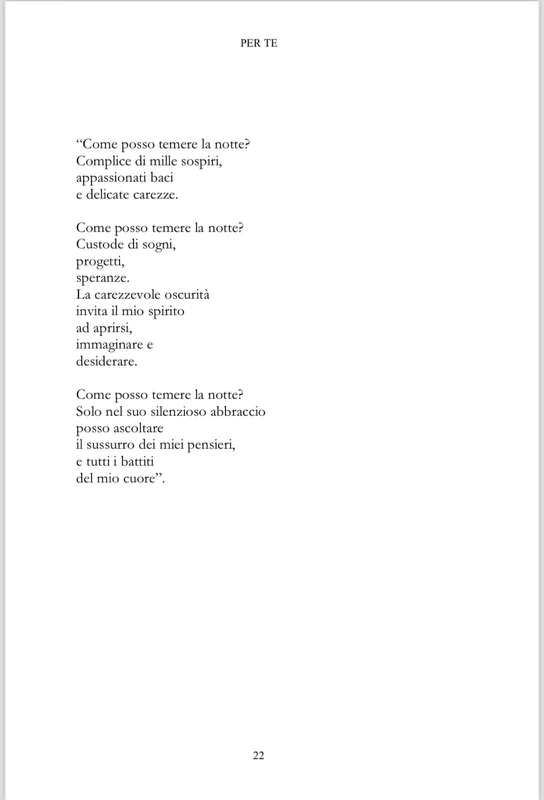
- Come posso temere la notte by Simona Decortis,
- Welcome for Thomas Mann by Attila József,
- Night, Silence, Desert by Mohammadreza Shajarian and Keyjan Kalhir,
- Családi kör / Family circle by Arany János,
- Párisban járt az Ősz / Autumn Walked in Paris by Ady Endre,
- The Wine of Your Eyes by Fereydoun Moshiri,
- The Tossed Stone by Endre Ady,
- Brazilianda by Mariusz Świetlicki,
- The Three Oddest Words by Wisława Szymborska
Come posso temere la notte
by Simona Decortis
-
Welcome for Thomas Mann by Attila József
Introduced by Tamara Ratz
Just as a tired child when put to bed
and tucked in snug, a stubborn sleepy-head,
still begs `Don’t go away, tell me a story’
(lest night should fall on him in sudden fury),
and while his little heart, congested, pants,
and even he knows not just which he wants,
the story, or your stay; may we prevail
on you to sit with us and tell a tale.
Tell us the old story, we won’t forget,
how you’ve been with us always, will be yet,
how we are with you, an imparted whole,
whose cares are worthy of a human soul.
You know it well, the poet never lies;
tell the full truth, not only that which is,
tell of that light which flames up in our brain:
when we’re apart, in darkness we remain.
As Hans Castorp through Madame Chauchat’s flesh,
let us tonight see through ourselves afresh,
your words, like pillows, muffle out the din –
tell us the joy of beauty, and the pain,
lifting our hearts from mourning to desire.
We’ve laid poor Kosztolányi in the mire,
and on mankind, as cancer did on him,
horrible monster-states gnaw limb by limb,
and we, aghast, ask what’s the next disease,
whence fall new wolfish ideologies,
what newer poison boils within our blood –
how long, and where, you can still read aloud?…
So. When you speak, we must not lose our flame,
we men should still be men in more than name,
and women still be women – lovely, free –
because true humans daily cease to be…
Sit down. Start our favourite story – please.
We’ll listen; happy he who only sees
your face among our race of evil will,
to know there’s one true European still.
Night, Silence, Desert by Mohammadreza Shajarian (singer) and Keyjan Kalhir (musician)
Presented by Ali Afshar
Családi kör / Family circle by Arany János
Introduced by Petra Gyuracz-Nemeth
The evening comes and everything is hushed,
while darkly nods the leafy mulberry tree;
a buzzing insect strikes against the wall,
a loud crash follows, there is heard no more.
As if the very clods of earth had legs
the clumsy frogs to rolling everywhere
while round the eves there wheels a wandering bat,
an old owl’s hooting in a ruined tower.
Recently milked by the woman of the house
the white form of a cow is faintly seen
chewing the cud in silence in the yard:
a placid beast, though bothered by her calf.
A cat, to lazy to go chasing flies,
her body stretched, moves slow with cautious steps,
she pauses, looks around and is gone –
she’s fled into the hall with sudden speed.
The door stands open; on the courtyard hedge
the hearth’s reflected light is welcoming.
Before the door, his feet upon the steps,
a faithful dog lies stretched to guard the home.
Within, the woman of the house skims milk;
her small boy asks and has from her a sip.
She then goes mingling with the other ones
just like the gentle moon among the stars.
A young girl’s throwing twigs upon the fire –
the eldest and most fair, a morning star;
she warms her iron for her new-made dress
– and ironing’s all it needs – for next day’s feast.
She tells a story to the younger ones,
sitting around at work, all shelling peas,
or shredding beans, their little chubby cheeks
lit by the fire, a flame with crackling pods.
The youngest asks for bread, then munches it
and weaves a circle with a burning brand.
The older boy ignores the rest and reads
(this lad will be a pastor, that is sure) –
such is at least his father’s fondest wish,
although as yet he doesn’t care for prayers
and much prefers to study songs and rhymes
he’s even tried his hand at writing verse.
But now they hear their father’s hoe put down,
his well-worn satchel’s hung upon a nail.
The children search in it and hope to find
some bits of bread he left after the day.
They thrust their hands in; there’s a sudden shriek –
„some devil’s in there…. No, a little rabbit!”
cries of delight… They will not sleep all night
they go and fetch it cabbage leaves to eat.
The father says „Good Evening” to them all,
sits down to stretch his tired and aching limbs;
with dusty shirt-sleeve wipes a wearied brow
that has been deeply furrowed by life’s cares.
But when he sees his little ones around,
delightfully his wrinkles disappear;
he knocks his soothing pipe upon the hearth
and smiles at kind words from his gentle wife.
The house-wife hurries then to fetch his food.
It’s proper that he should not have to wait.
Soon she has pushed the small round table out
and brought the simple dishes she’s prepared.
She and the children have already fed.
„Come dear,” he says, they must all eat again,
the food tastes better if all feed together:
then gives the little ones a leg or wing.
„But who’s that knocking? Sarah, go and see…”
A poor man’s asking shelter for the night.
Don’t turn him out if he has got no home;
how many suffer driven from shut doors.
The eldest girl gets up and asks him in,
a crippled soldier bids them a good evening:
„May God bless what you eat,” he says to them,
„and those, too, who partake of it,” he adds.
The father thanks him. „Come, and have your share;
mother, put on his plate a little more.”
Then he invites him to sit down with them
the man says `no,’ then readily agrees,
enjoys a simple but a tasty meal,
a jug of water then quenches his thirst.
No words are uttered while they have their food
this is the Magyars’ custom when they eat.
But when the meal is done all do their best
to make it easy for their guest to speak.
At first his words come like a little stream,
but like a swelling river they soon flow.
The elder boy, too, lays his book aside;
he leans towards him with attentive eyes;
no sooner does the soldier come to pausing
the boy entreats him: „Tell another tale!”
„They are not `tales”‚ – the father chides the boy,
the soldier understands and carries on.
And they are hanging on his every word,
but it’s the eldest girl who’s most intent.
When no one’s listening, or no one sees,
she asks about `her brother’ with a blush:
for three years she’s been asking after him,
she’ll wait one more before she weds another.
The evening ends; the warm fire shines no more.
The glowing cinders now begin to wink.
The children, too, are tired, there’s one asleep.
His head is resting on his mother’s lap.
The guest speaks less, the silences increase;
only the purring of the cat is heard.
Then rustling straw is heaped upon the ground
the crickets reign now in this silent realm.
Masterman, Neville
https://www.babelmatrix.org/works/hu/Arany_János-1817/Családi_kör/en/1968-Family_circle
Párisban járt az Ősz / Autumn Walked in Paris by Ady Endre
Introduced by Kitti Hiezl
Translation by Anton N. Nyerges.
Autumn Walked in Paris
Autumn in Paris wandered down
Upon the earth like a dancing clown
He tottered on sodden and weary feet,
On the brown leaves fell with a drip of sleet.
A moment stood with a mournful air
In a park, ‚neath the trees, as if lost in prayer.
From his haggard lips sighed a whispered cry
Of many a sweet dying memory.
Autumn in Paris wandered down
Upon the earth like a dancing clown.
Upon the Seine’s chill tide, adrift
Faded roses and dead leaves swift.
And my heart was shaking in its place
As the teeming crowds I tried to face,
While Autumn in Paris on the brown leaves fell
And grinned at me with a knowing spell.
By Vernon Watkins:
Autumn in Paris
Autumn has come to town,
His cloak covered with mildew;
He drifts on soggy, rotting feet,
On the dead leaves, with sleet.
He pauses for a little while,
Like one lost and miserable,
In the park under the barren trees,
Murmuring a sickly smile.
Autumn has come to town,
His cloak covered with mildew.
On the Seine’s cold water drifts
The refuse of withered roses.
My heart stood still,
I gazed around the teeming city;
Autumn has come to town
And grinned at me like an old clown.
By Anton Nyerges (another version):
Autumn in Paris
Autumn arrived in Paris.
His cloak was old and spotted,
He tottered on tired feet,
Dripping leaves and sleet.
He paused beneath the barren trees,
Like one lost and sad;
He murmured in a mournful voice
Faded memories of summer.
Autumn arrived in Paris.
His cloak was old and spotted.
On the Seine’s cold water drifted
Dead roses and fallen leaves.
My heart was heavy and I stood,
While the teeming crowds pressed round.
Autumn arrived in Paris,
And grinned at me like a clown.
The Wine of Your Eyes by Fereydoun Moshiri
Introduced by Mona Erfanian Salim
|
I will not sleep until dawn tonight من امشب تا سحر خوابم نخواهد برد All my thoughts are tomorrow’s thoughts همه اندیشه ام اندیشه فرداست My being is full of your desire وجودم از تمنای تو سرشار است Time is sleeping and awake in the bed of night زمان در بستر شب خواب و بیدار است The air is quiet, the night is silent, the sky is open هوا آرام شب خاموش راه آسمان ها باز |
|
My imagination flies like wild pigeons خیالم چون کبوترهای وحشی می کند پرواز I will be all eyes سراپا چشم خواهم شد I will see you in my arms تو را در بازوان خویش خواهم دید The dew of my passion will be the dew of your face سرشک اشتیاقم شبنم گلبرگ رخسار تو خواهد شد The air is quiet, the night is silent, the sky is open هوا آرام شب خاموش راه آسمان ها باز My imagination flies like wild pigeons خیالم چون کبوترهای وحشی می کند پرواز I will burn my body with the wine of the poetry of your eyes تنم را از شراب شعر چشمان تو خواهم سوخت I will read you a poem برایت شعر خواهم خواند You will read me a poem برایم شعر خواهی خواند I will read you a poem برایت شعر خواهم خواند |
|
You will read me a poem برایم شعر خواهی خواند I will kiss your sweet smiles تبسم های شیرین تو را با بوسه خواهم چید The air is quiet, the night is silent, the sky is open هوا آرام شب خاموش راه آسمان ها باز My imagination flies like wild pigeons خیالم چون کبوترهای وحشی می کند پرواز |
The Tossed Stone by Endre Ady
Introduced by Nikolett Bosnyák-Simon
As does the tossed stone fall to the ground,
My tiny country, so each time around,
Your son comes home to stay.
Far away towers he visits, he must,
Giddily, sadly, he falls to the dust,
The dust from whence he came.
Longing to leave, but unable to flee,
Magyar desires, though fading they be,
Rise, take over again.
In my great anger to you I belong,
In cares of love and in each faithless wrong,
I’m sadly, a Magyar.
Like stone lacking will when hurled in the air,
With exemplary form, my land, I dare
To slap your countenance.
Woe, my intentions are ever in vain,
Each time you toss me, I’ll fly back again,
Many times, till it ends.
Kery, Leslie A.
Brazilianda by Mariusz Świetlicki
Introduced by Piotr Zmyślony
I’m not calling
To wake you up
I’m calling
To listen
how you breathe
Outside the window
There are two taxi cab
I won’t go in either one
Coma
Fever
Coma
Fever
Are you sorry?
Nie dzwonię po to
Żeby cię obudzić
Dzwonię po to
Żeby słuchać
Jak oddychasz
Za oknem
Stoją dwie taksówki
Nie pojadę żadną z nich
Śpiączka
Gorączka
Śpiączka
Gorączka
Przykro Ci?
The Three Oddest Words by Wisława Szymborska
Introduced by Aleksandra Łapko
When I pronounce the word Future,
The first syllable already belongs to the past.
When I pronounce the word Silence,
I destroy it.
When I pronounce the word Nothing,
I make something no non-being can hold.
 tourism in the city